BBA vs BCA: Which Career Path Is Right for You?
BBA vs BCA: Which Career Path Is Right for You?

Blog 2
Blog Date : 16-08-2026
BBA vs BCA: Which Career Path Is Right for You?
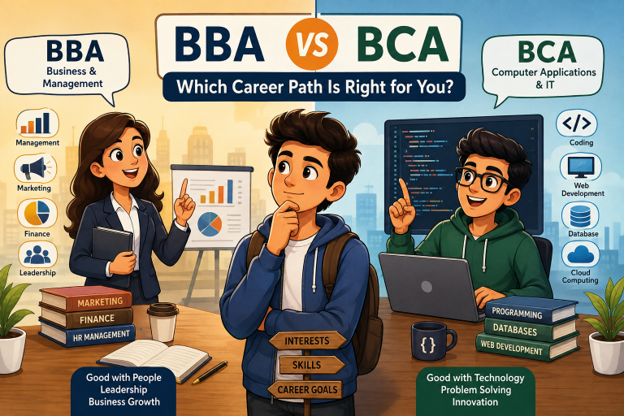
Choosing the right undergraduate course is one of the most important decisions students make after completing their 12th standard. With numerous career options available today, it is natural for students to feel confused about which course best matches their interests and career goals.
Two popular choices among students are BBA (Bachelor of Business Administration) and BCA (Bachelor of Computer Applications). While both programs offer excellent career opportunities, they focus on very different areas. BBA is primarily related to business and management, whereas BCA focuses on computer applications and technology.
So, BBA vs BCA—which career path is right for you? Let's understand the difference between these two courses and explore which one may be the better choice for your future.
What Is BBA?
1. Changing Industry Requirements
BBA, or Bachelor of Business Administration , is an undergraduate program designed for students interested in business, management, entrepreneurship, marketing, finance, and organizational operations.
The course introduces students to important areas of business and helps them develop both management knowledge and professional skills.
What Do Students Learn in BBA?
Depending on the institution and specialization, BBA students may study subjects such as:
Along with business concepts, BBA students can develop practical skills through:
- Principles of Management
- Marketing Management
- Financial Management
- Human Resource Management
- Business Economics
- Business Communication
- Organizational Behaviour
- Business Analytics
- Digital Marketing
Along with classroom learning, students can benefit from presentations, case studies, group projects, internships, and other practical activities.
What Is BCA?
BCA, or Bachelor of Computer Applications, is an undergraduate program focused on computer applications, software development, programming, and information technology.
It is a suitable option for students who enjoy working with computers and are interested in technology and software-related careers.
What Do Students Learn in BCA?
BCA students may study subjects such as:
- Programming Languages
- Database Management
- Web Development
- Computer Networks
- Software Engineering
- Data Structures
- Operating Systems
- Cloud Computing
- Artificial Intelligence
- Cybersecurity
Practical assignments and software projects help students understand how technology is used to solve real-world problems.
BBA vs BCA: Key Difference
The major difference between BBA and BCA is their area of specialization.
| BBA | BCA |
|---|---|
| Focuses on business and management | Focuses on computers and technology |
| Suitable for students interested in business | Suitable for students interested in technology |
| Develops leadership and management skills | Develops programming and technical skills |
| Covers marketing, finance, HR and entrepreneurship | Covers programming, databases, software and applications |
| Career opportunities in management and business | Career opportunities in IT and software |
| Can lead to an MBA and management careers | Can lead to an MCA and advanced IT careers |
This approach helps students become more confident and better prepared for internships, jobs, entrepreneurship, and higher studies.
Career Opportunities After BBA
A BBA degree can open doors to several business and management-related career paths.
Graduates may explore roles such as:
- Marketing Executive
- Business Development Executive
- Human Resources Executive
- Sales Executive
- Operations Executive
- Financial Services Executive
- Digital Marketing Executive
- Business Analyst
- Entrepreneur
Students who want to pursue higher education can also consider an MBA (Master of Business Administration) after completing their BBA.
An MBA can help students specialize in areas such as marketing, finance, human resources, operations, business analytics, or international business.
Career Opportunities After BCA
BCA graduates can explore career opportunities in the rapidly growing IT and technology sector.
Depending on their skills and specialization, they may pursue roles such as:
- Software Developer
- Web Developer
- Application Developer
- System Administrator
- Database Administrator
- IT Support Executive
- Software Tester
- Data Analyst
- Cybersecurity Associate
Students who want to develop advanced computer application and technology skills can pursue an MCA (Master of Computer Applications) after BCA.
BBA or BCA: Which One Is Better?
There is no single answer to whether BBA or BCA is better. The right choice depends on your interests, strengths, and career goals.
Choose BBA If You:
- Enjoy business and management topics
- Have an interest in marketing, finance, HR, or entrepreneurship
- Like communicating and working with people
- Want to develop leadership skills
- Are interested in starting a business
- See yourself working in a management or corporate role
- Plan to pursue an MBA in the future
Choose BCA If You:
- Enjoy computers and technology
- Like programming and logical problem-solving
- Are interested in software and applications
- Enjoy learning new technologies
- Want to build a career in the IT industry
- Are interested in web or software development
- Plan to pursue an MCA in the future
Skills You Should Develop Alongside Your Degree
Whether you choose BBA or BCA, your degree is only one part of your career preparation. Developing practical and professional skills can make you more career-ready.
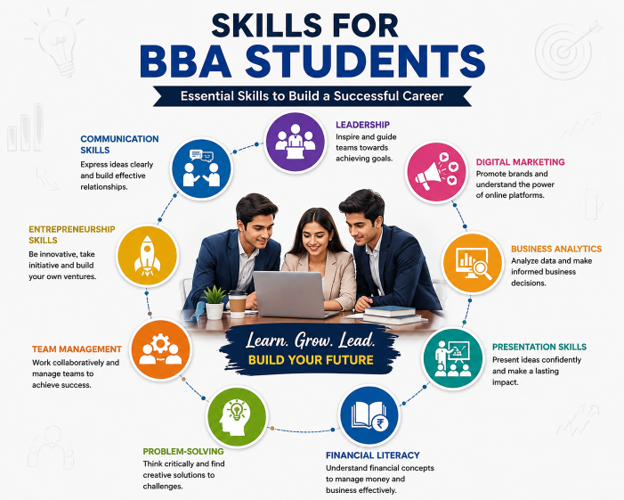
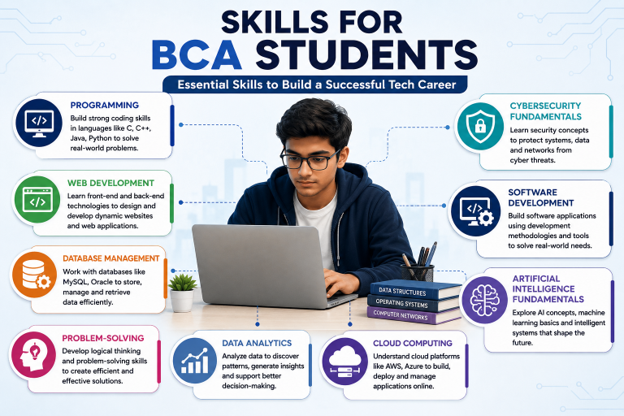
Building projects and gaining internship experience can also help students demonstrate their practical abilities to potential employers.
BBA vs BCA: Think About Your Interests
When choosing between BBA and BCA, students should avoid selecting a course simply because it is popular or because someone else recommends it.
Ask yourself:
Do I enjoy business, management, communication, and leadership?
If yes, BBA could be a suitable option.
Do I enjoy computers, programming, technology, and logical problem-solving?
If yes, BCA could be a better fit. Understanding your interests and long-term goals can make the decision much easier.The Importance of Practical Learning
The professional world is changing quickly. Employers increasingly value candidates who can apply their knowledge to real-world situations.
Therefore, students should look beyond textbooks and focus on practical learning through:
- Internships
- Live projects
- Industry visits
- Workshops
- Seminars
- Certifications
- Group projects
- Technical or business competitions
These experiences can help students develop confidence and industry-relevant skills.
BBA vs BCA: Which Career Path Should You Choose?
Both BBA and BCA can lead to rewarding careers when students choose according to their interests and continuously develop their skills.
BBA is a strong option for students interested in business, management, marketing, finance, entrepreneurship, and leadership.
BCA is a strong option for students interested in computers, programming, software development, IT, and emerging technologies.
The most important thing is not simply choosing the course with the highest demand. Instead, choose a program that matches your interests, abilities, career goals, and willingness to learn.
Conclusion
The BBA vs BCA decision is ultimately about choosing the career direction that suits you best. Both programs can provide a strong foundation for professional growth, but they take students toward different career paths.
If you see yourself leading teams, managing businesses, developing marketing strategies, or becoming an entrepreneur, BBA may be the right choice. If you are passionate about technology, programming, software, and computers, BCA may be the better option.
Whatever you choose, remember that your degree is just the beginning. Continuous learning, practical experience, communication skills, internships, and industry exposure can play an important role in building a successful career.
Choose the course that matches your passion, develop the right skills, and take the first step toward your future today.