Why Skill-Based Education Is Important for Students in 2026
Why Skill-Based Education Is Important for Students in 2026

Blog 3
Blog Date : 20-08-2026
Why Skill-Based Education Is Important for Students in 2026
Education is no longer just about getting a degree. In 2026, students are entering a world where technology is changing quickly, industries are evolving, and employers are looking for people who can actually apply what they have learned.
This is where skill-based education becomes important.
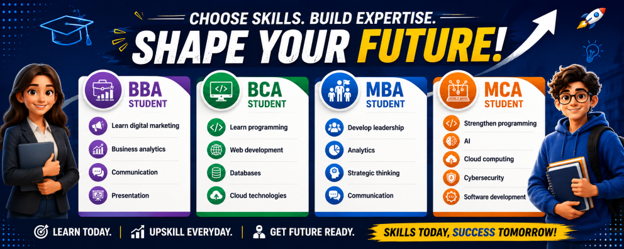
A degree gives students academic knowledge, but practical skills help them use that knowledge in real situations. Whether a student chooses BBA, BCA, MBA, or MCA , developing the right combination of technical, professional, and soft skills can make a big difference in their career journey.
What Is Skill-Based Education?
1. Changing Industry Requirements
Skill-based education focuses on learning by doing. Instead of limiting education to textbooks and examinations, it encourages students to develop practical abilities that can be used in the workplace.
These skills may include:
- Communication
- Leadership
- Problem-solving
- Digital skills
- Teamwork
- Data analysis
- Programming
- Business management
- Presentation
- Entrepreneurship
The goal is simple: students should not only understand a concept but also know how to use it.
Why Is Skill-Based Education Important in 2026?
1. The Job Market Is Changing
Technology has changed the way businesses operate. Artificial intelligence, automation, cloud computing, data analytics, and digital platforms are now part of many industries.
As a result, employers increasingly value graduates who are comfortable learning new tools and adapting to change.
Students who develop practical and digital skills during college can be better prepared to face these changes.
2. A Degree Alone Is Not Enough
A degree remains important, but employers also want to know what a candidate can do.
For example, a BBA student may have studied marketing, but knowing how to create a digital marketing campaign, analyse customer data, or present a business strategy can make that knowledge more useful.
Similarly, an MCA student may understand programming concepts, but building a working application or website gives them an opportunity to demonstrate their practical abilities.
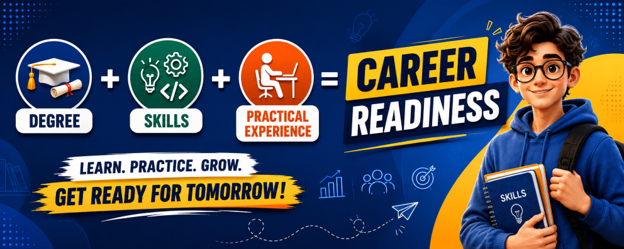
This is why students should think of education as:
Skill Development for BBA Students
BBA (Bachelor of Business Administration) is a popular choice for students interested in business and management.
Along with academic subjects, BBA students can benefit from developing skills such as:
- Communication
- Leadership
- Digital marketing
- Business analytics
- Presentation skills
- Financial literacy
- Problem-solving
- Team management
- Entrepreneurship
Participating in presentations, business case studies, internships, group projects, and management activities can help BBA students understand how business concepts work outside the classroom.
Skill Development for BCA Students
BCA (Bachelor of Computer Applications) is suitable for students interested in computers, software, and technology.
The technology sector changes rapidly, so BCA students should continuously strengthen their technical skills.
Some valuable areas include:
- Programming
- Web development
- Database management
- Data analytics
- Cloud computing
- Cybersecurity
- Software development
- Artificial intelligence
- Problem-solving
Building small applications, websites, or software projects can give students practical experience and help them create a stronger portfolio.
Why Skills Matter for MBA Students
An MBA (Master of Business Administration) can provide advanced knowledge of management and business. However, today's management professionals also need to understand technology, data, communication, and changing customer expectations.
MBA students can focus on developing:
- Strategic thinking
- Leadership
- Business analytics
- Communication
- Decision-making
- Project management
- Digital marketing
- Financial understanding
- Negotiation
These skills can help students become more confident when dealing with real business challenges.
Why Skills Matter for MCA Students
An MCA (Master of Computer Applications) students can build on their technical knowledge by gaining practical experience in modern technologies.
Depending on their interests, they can explore areas such as:
- Artificial intelligence
- Cloud computing
- Cybersecurity
- Full-stack development
- Mobile application development
- Database technologies
- Software engineering
Practical projects and internships can help MCA students understand how technical knowledge is applied in professional environments.
Soft Skills Are Equally Important
One common mistake students make is focusing only on technical knowledge.
A talented programmer still needs to communicate with a team. A management professional needs to present ideas clearly. A business analyst needs to explain findings. A team leader needs to understand and motivate people.
That is why soft skills such as communication, teamwork, adaptability, time management, leadership, and critical thinking are an important part of skill-based education.
Practical Learning Builds Confidence
There is a big difference between reading about something and actually doing it.
When students participate in projects, internships, workshops, presentations, competitions, and industry activities, they get opportunities to apply what they have learned.
This practical exposure can help students:
- Understand concepts better
- Become more confident
- Learn from mistakes
- Improve problem-solving
- Develop teamwork
- Understand workplace expectations
Even small projects can become valuable learning experiences.
The Role of Colleges in Skill Development
Colleges have an important role to play in creating an environment where students can develop both knowledge and practical skills.
A strong learning environment can include:
This practical exposure can help students:
- Industry-oriented projects
- Workshops and seminars
- Internship opportunities
- Guest lectures
- Career guidance
- Skill-development programs
- Practical assignments
- Group discussions
- Placement preparation
However, students also need to take initiative. Learning does not stop when a class ends. Students can use online resources, certifications, projects, internships, and professional communities to continue developing their skills.
How Students Can Become More Skill-Ready
Students do not need to learn everything at once. A better approach is to choose a few skills that match their career goals and gradually improve them.
For example:
The key is consistency. Spending a little time every week on practical learning can make a significant difference over the course of a degree.In 2026, successful education is about more than completing a course. Students need to be prepared to learn, adapt, communicate, solve problems, and apply their knowledge in real-world situations.
Whether you choose BBA, BCA, MBA, or MCA , developing practical and industry-relevant skills can help you become more confident and career-ready.
A degree can open the door, but skills can help you make the most of the opportunities behind it.
The best time to start developing those skills is not after graduation. Start while you are a student, keep learning, and build your future one skill at a time.