How College Students Can Prepare for the Future Job Market
How College Students Can Prepare for the Future Job Market

Blog 5
Blog Date : 31-08-2026
How College Students Can Prepare for the Future Job Market
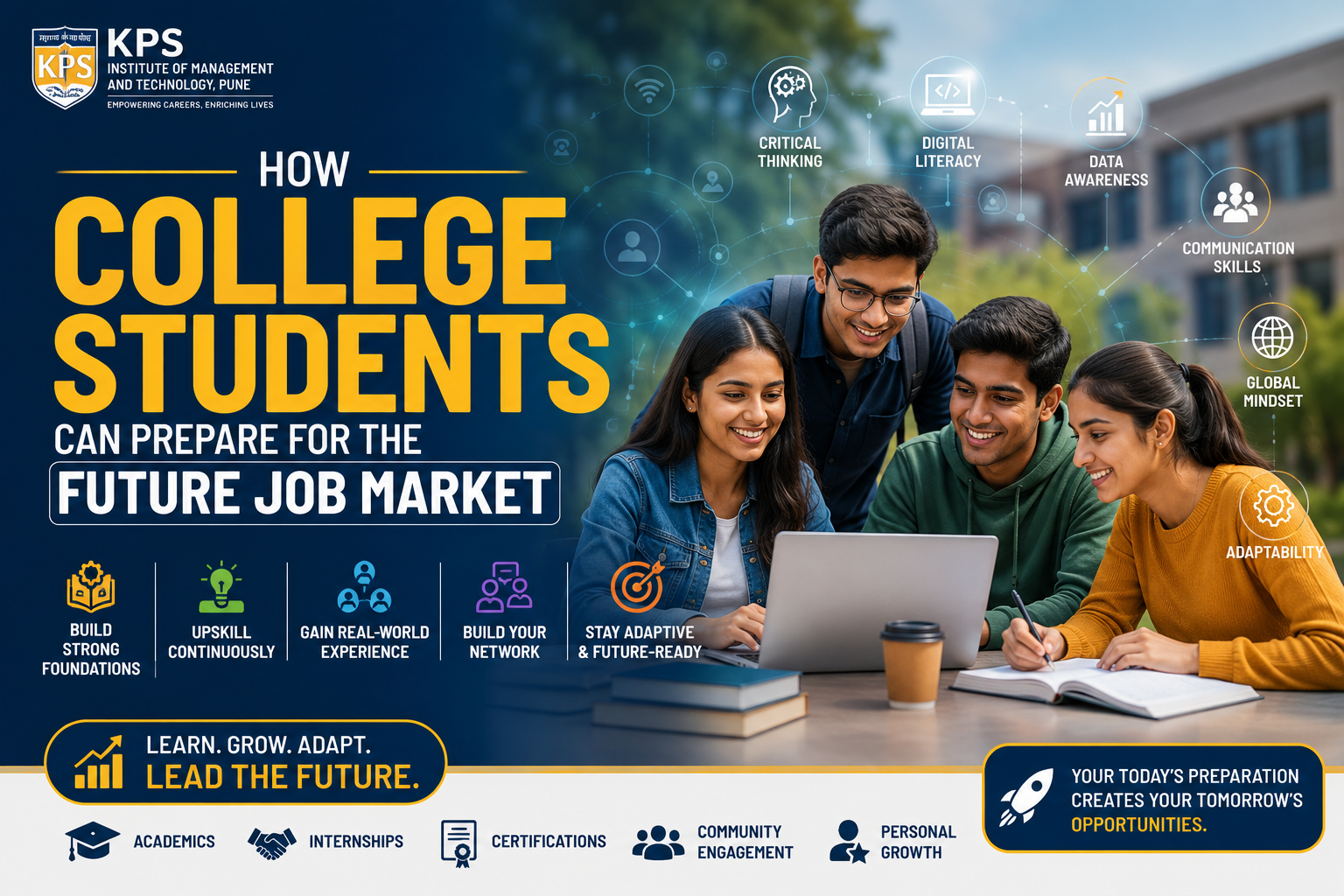
The job market is changing faster than ever. Technology, artificial intelligence, automation, remote work, and new business models are creating opportunities while also changing the skills employers expect from graduates. For college students, earning a degree is important, but building practical skills and staying adaptable can make a major difference in career success.
1. Develop Industry-Relevant Skills
Students should focus on skills that are useful in their chosen field. Along with academic knowledge, they can learn tools and technologies commonly used by employers.
For example, students interested in IT can develop skills in programming, databases, cloud computing, cybersecurity, data analytics, and artificial intelligence. Management students can strengthen their knowledge of communication, marketing, finance, business analytics, and project management.
2. Gain Practical Experience
Employers often value candidates who can apply what they have learned. Students can gain practical experience through internships, live projects, workshops, freelancing, volunteering, and college projects.
Even small projects can help students understand how classroom concepts are used in real-world situations.
3. Learn to Work With AI and Technology
Artificial intelligence is becoming part of many industries. Students do not necessarily need to become AI experts, but they should understand how modern digital tools can improve productivity and problem-solving.
Learning responsible and effective use of AI tools can help students stay competitive while developing skills that technology cannot easily replace, such as creativity, judgment, communication, and teamwork.
4. Improve Communication and Soft Skills
Technical knowledge alone may not be enough to build a successful career. Employers also look for candidates who can communicate clearly, work in teams, solve problems, manage time, and adapt to new situations.
Students can develop these skills through presentations, group projects, debates, competitions, student clubs, and leadership activities.
5. Build a Strong Professional Profile
Students should start preparing their professional profiles before graduation. A well-organized resume, LinkedIn profile, portfolio, and collection of projects can help demonstrate their abilities to potential employers.
For students in technical fields, a portfolio can include websites, applications, data projects, or other practical work. Management students can showcase presentations, research projects, business plans, or marketing campaigns.
6. Keep Learning
The future job market will continue to evolve. Students should develop a habit of continuous learning rather than depending only on their college curriculum.
Online courses, certifications, industry webinars, workshops, books, and professional communities can help students stay updated with changing technologies and industry expectations.
7. Understand Industry Trends
Students should regularly follow developments in their chosen industry. Understanding emerging technologies, new job roles, changing employer expectations, and market trends can help them make better career decisions.
Preparing for the future job market is not about predicting exactly what jobs will exist years from now. It is about becoming adaptable, skilled, curious, and ready to learn. College students who combine academic knowledge with practical experience, digital skills, communication abilities, and continuous learning can build a stronger foundation for their careers.
The future belongs to students who are willing to learn, adapt, and turn opportunities into skills.